

Don’t let missing documents ruin your road test day. To avoid cancellations or delays, ensure you bring the following essentials:
- Photo ID: A valid, government-issued ID with your legal name and birth date (e.g., Canadian passport, driver’s licence, or PR card). Expired or photocopied documents won’t work.
- Proof of Legal Status: Depending on your situation, bring your birth certificate, citizenship card, PR card, or valid permits (e.g., study or work permit).
- Proof of Residency: Recent utility bills, lease agreements, or bank statements dated within 90 days.
- Learner’s Permit or Licence: Your current learner’s permit or licence, and if from another country, an official certified translation if not in English or French.
- Road Test Appointment Confirmation: Both printed and digital copies for smooth check-in.
- Vehicle Documents: Valid registration, proof of insurance, and if it’s not your vehicle, an authorization letter from the owner.
Each province has specific rules, so double-check what’s required where you live. For example, Québec requires a paper copy of insurance and an “Examen de conduite” sign for the vehicle, while Ontario may ask for a Declaration of Highway Driving Experience for certain tests.
Pro tip: Arrive at least 30 minutes early, organize your documents in advance, and ensure your vehicle meets safety standards. With proper preparation, you’ll avoid unnecessary stress and delays.
Required Documents for Your Canadian Road Test
When heading to your road test, make sure you have all the required paperwork. Testing centres are strict about documentation, and missing even one item could result in delays or cancellations. Here's a breakdown of what you'll need to bring:
Primary Identification
You’ll need to present a valid, government-issued photo ID that clearly shows your legal name and birth date. Examples include a Canadian passport, provincial or territorial driver’s licence, or Permanent Resident card. Only original documents are accepted - photocopies or expired IDs won’t work.
If you’re in Alberta and plan to use a birth certificate as your primary ID, make sure to bring an additional piece of photo identification since birth certificates don’t include photos.
Proof of Legal Status in Canada
To confirm your legal right to be in Canada, you’ll need appropriate documentation:
- Canadian citizens: Bring a birth certificate, citizenship card, or Canadian passport.
- Permanent residents: Provide your Permanent Resident card or immigration documents like a Record of Landing or Confirmation of Permanent Residence.
- Temporary residents: Have your valid study permit, work permit, or visitor record ready.
As always, ensure these documents are original and up to date.
Proof of Residency
You must show proof that you live in the province or territory where the test is being taken. Acceptable documents include:
- Recent utility bills
- Lease agreements
- Bank statements with your address
These documents should be dated within the last 90 days. Double-check that the address matches the one you provided when booking your test to avoid any complications or rescheduling.
Road Test Appointment Confirmation
Most testing centres require proof of your scheduled appointment. Bring both a printed and digital copy, just in case. Having this confirmation helps the staff locate your booking and keeps things running smoothly.
Learner's Permit or Current Licence
Don’t forget your valid learner’s permit or driver’s licence. This could be a provincial, out-of-province, or international licence. If you’re using a licence from another country, ensure it’s accompanied by an official certified translation if it’s not in English or French. Certified translations must be done by a professional translator and should be presented alongside the original licence or any related documents.
Some provinces may also ask you to surrender an out-of-province licence or provide extra paperwork if your licence has expired. Be sure to check the specific requirements for your region.
Vehicle and Insurance Documents
Having all your vehicle documents in order is crucial for your road test. Missing even one item could result in your test being cancelled.
Vehicle Requirements
Your test vehicle must comply with provincial safety standards and be in excellent working condition. Before the test begins, examiners will inspect key components such as the lights, brakes, horn, mirrors, windshield, and seatbelts. In Alberta, they’ll also check that all lights are operational and the licence plate is valid. In Québec, they’ll look at the condition of the windows and signal lights.
Vehicles often fail these inspections for issues like broken lights, worn-out tires, cracked windshields, faulty brakes, or missing mirrors. To avoid these problems, perform a detailed safety check the day before your test. Make sure everything is working properly to prevent cancellations and additional fees.
Proof of Insurance and Registration
You’ll need to present original, valid vehicle registration and proof of insurance for the vehicle you’re using. Photocopies or expired documents won’t be accepted.
| Province | Registration Document | Insurance Requirement | Special Notes |
|---|---|---|---|
| Alberta | Current original registration | Motor Vehicle Liability Insurance Card ("pink slip") | Licence plate must be valid |
| Québec | Signed, valid registration certificate | Paper proof of liability insurance | Digital insurance copies not accepted |
| Ontario | Valid vehicle registration | Proof of insurance meeting provincial standards | Vehicle must meet safety standards |
In Alberta, the insurance card is often referred to as the "pink slip." Québec requires a paper copy of your liability insurance - digital versions are not allowed.
Your insurance must meet your province’s minimum liability requirements and be valid on the day of your test. Additionally, the policy must cover you as the driver during the test.
If you’re not using your own vehicle, additional documentation may be required.
Authorization Letter (If Needed)
If you’re borrowing a vehicle, you’ll need an original, signed authorization letter from the owner. This letter should include their contact information, the vehicle’s details (make, model, year, and licence plate), your name, and the test date.
For rental vehicles, you’ll need to provide the rental agreement. In Québec, this replaces the usual registration document. If the vehicle belongs to a car-sharing service or a company, you’ll need an original letter on official company letterhead.
In Québec, there’s an extra requirement: a removable sign reading "Examen de conduite" must be displayed on the vehicle. The SAAQ supplies this sign, and it must be installed before the test starts. Keep in mind that passengers and pets are not allowed in the car during Québec road tests.
To streamline your test day, organize all your documents in a folder or envelope and double-check their validity ahead of time. Being prepared will help ensure your road test begins without unnecessary delays or complications.
Document Requirements by Province and Territory
Here’s a breakdown of the documentation you’ll need based on your province or territory. Make sure to follow these region-specific guidelines to avoid any last-minute hiccups.
Ontario
In Ontario, you’ll need to bring original, government-issued identification that verifies your name and birth date. If you’re taking the G2 exit test, you’ll also have to submit a Declaration of Highway Driving Experience for highways with speed limits of at least 80 km/h. Newcomers must present original immigration documents and surrender any out-of-province or foreign licence. If your licence isn’t in English or French, an approved translation is required.
At Ontario DriveTest Centres, you can pay using cash, debit, or credit card.
Pro tip: Arrive at least 30 minutes before your appointment to ensure there’s enough time for document checks and processing.
Québec
In Québec, you’ll need proof of residency, such as a recent utility bill or a lease agreement. Newcomers must also provide proof of residence from their previous location. Depending on your status, you’ll either need a Québec learner’s licence or two valid pieces of identification. For licences issued in languages other than English or French, an official translation is mandatory.
If you’re taking the road test, bring a paper copy of your liability insurance - digital versions won’t be accepted. For personal vehicles, you’ll also need the valid registration certificate. If you’re using a rental or driving school vehicle, the rental agreement can replace the registration document.
Road test fees in Québec are $33.00 and can be paid by cash, debit, cheque, or money order. Note that credit cards are not accepted.
British Columbia
British Columbia requires valid government-issued photo ID, with your current address appearing on your BC Services Card or driver’s licence. For shared vehicles, you’ll need an original authorization letter on official letterhead. This letter must include details about the vehicle and your test, and you’ll need a new letter for each test attempt.
If you’re new to BC, bring your foreign licence along with immigration documents. If your licence isn’t in English, you’ll need an official translation. Payments for test fees can be made by debit, credit, or cash at ICBC offices.
For shared vehicles, it’s a good idea to contact the vehicle owner or car-sharing company well in advance to ensure you receive the properly formatted authorization letter in time for your test.
sbb-itb-43e39f6
Road Test Day Preparation
Getting organized with your documents is just the start - being prepared for the actual test day can make all the difference. A few smart steps can help ensure everything goes smoothly and keep unnecessary stress at bay.
Arrive Early
Plan to get to the test centre at least 30 minutes early. This extra time gives staff enough room to review your identification, proof of residency, learner's permit, and vehicle documents without rushing. The examiner will also need to inspect your vehicle for safety, checking things like the lights, brakes, mirrors, horn, and windshield before the test begins.
Arriving early also helps you avoid potential delays caused by unexpected hiccups. Test centres are busy places, and showing up late could mean rescheduling your test for another day - a hassle no one wants.
Payment of Outstanding Fees
Make sure you’re ready to pay any outstanding fees with the correct payment method. Each province has its own rules, so it’s important to check what’s accepted at your test centre.
For instance, in Québec, the road test fee is $33.00 CAD. You can pay with cash, debit, cheque, or money order, but credit cards are not accepted at SAAQ locations. Other provinces may have different restrictions, so double-check to avoid surprises.
Also, bring the exact amount if possible. Scrambling for change or dealing with payment issues can add unnecessary stress right before your test.
Additional Items to Bring
If you wear corrective lenses, don’t forget them - showing up without them could mean a failed or postponed test. This rule applies everywhere, from Ontario to British Columbia.
Have your appointment confirmation handy, along with any additional items your specific test might require. For example, some test types may need a signed consent form or proof of highway driving experience.
It’s also important to note that no passengers or pets are allowed in the car during your test. The only exceptions are authorized interpreters or support persons, if needed. If someone drives you to the test centre, they’ll need to wait outside the vehicle while you complete your exam.
For details on rental or car-sharing requirements, refer back to the earlier section on vehicle documentation.
Practice and Route Preparation
Getting familiar with your test route can make a world of difference on test day. Pairing this practice with your overall preparation can lead to a smoother and more confident experience.
Using Drive Test Routes for Preparation
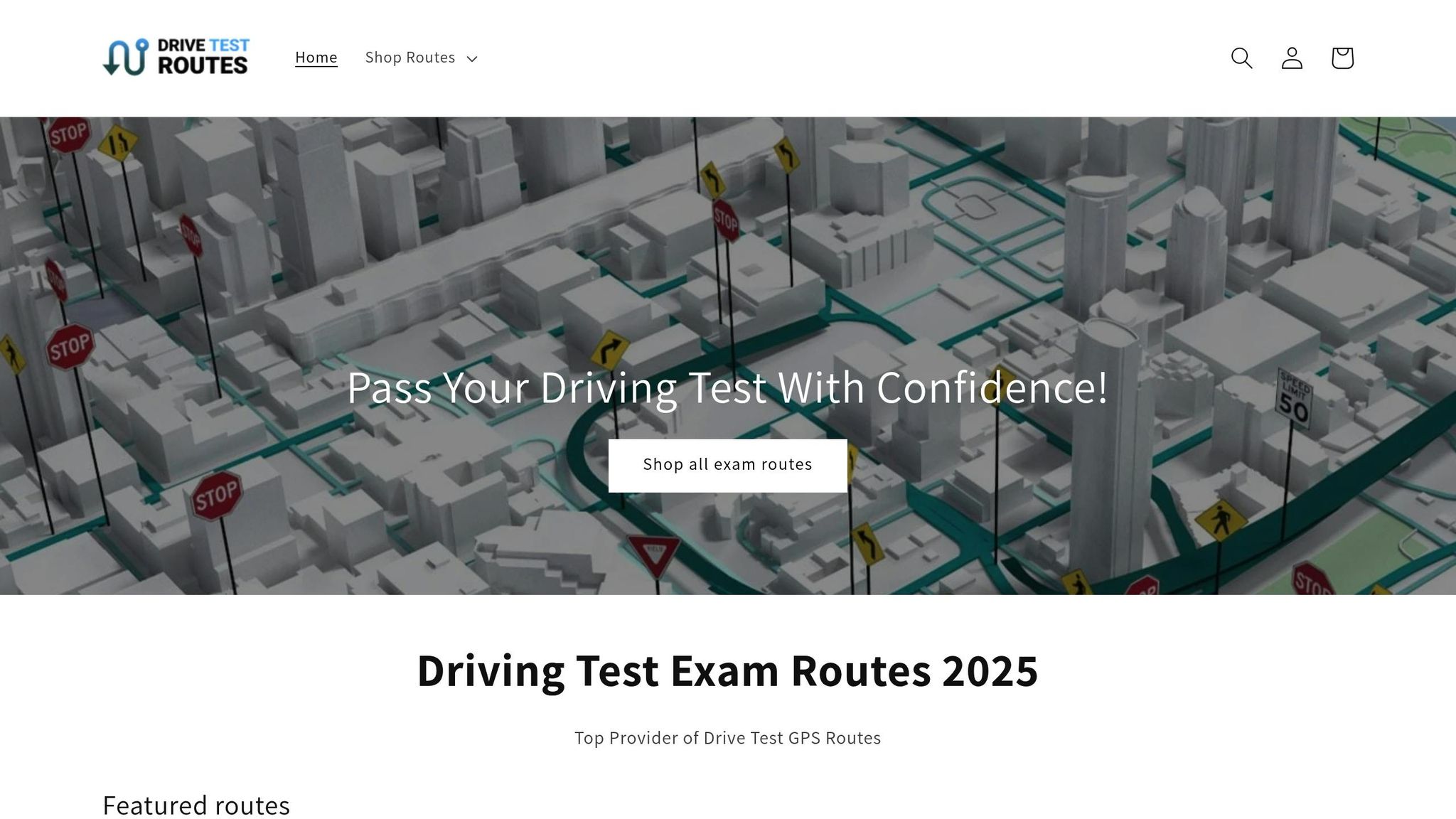
Drive Test Routes offers GPS-based road test routes specifically for Canadian DriveTest Centres. These are the same routes examiners use during the test. For $14.99 CAD, you can download these routes and use them with Google Maps on your phone.
The platform covers numerous DriveTest Centres across Canada, so you can choose your specific testing location. Each download includes not just the GPS routes but also examiner mark sheets and practice sheets. These resources help you understand the key skills and manoeuvres examiners will evaluate.
What makes this approach stand out is its precision. Instead of practising randomly, you’ll focus on the exact streets, intersections, and traffic patterns that you’ll encounter during your test.
"The map provided enabled me to drive around the test routes in advance. My phone worked well with the route, and the route information was clear and accurate. And I passed!" - Jasprit S., Brampton
The GPS files integrate smoothly with navigation apps on your smartphone, making it simple to follow the routes during your practice drives. You can also revisit challenging sections as many times as needed to master tricky turns or intersections.
Benefits of Route Practice
Practising on the actual test routes offers targeted benefits that general driving lessons often don’t. Knowing where you’ll need to turn, which lanes to use, and what traffic patterns to expect allows you to focus on showcasing proper driving techniques instead of worrying about navigation.
This familiarity can significantly ease test-day nerves. Many candidates fail not because they lack driving skills but because they struggle with the stress of navigating unfamiliar roads while being evaluated. Practising on the actual test routes eliminates that uncertainty and lets you concentrate on your performance.
"The navigation routes were extremely helpful to me. In my drive center, I had two routes, so I practised them both to check out signs, road markings, etc., so I felt more comfortable on the test. I will recommend this to future learners. I also passed my G2 test the first time!" - Sarah J., Oakville
There’s also a financial upside. Instead of paying for multiple driving lessons that might not target your test area, you can practise independently on the exact routes. This focused approach can help you pass on your first try, saving you from re-test fees and additional prep costs.
Route practice also highlights tricky areas. Whether it’s merging onto a busy highway or navigating a complex intersection with multiple turning lanes, practising repeatedly under different conditions builds the confidence and muscle memory you need to succeed on test day.
Conclusion
Your success in the road test depends heavily on being well-prepared and practising effectively. Having all your original, valid documents ready is non-negotiable - forgetting even one piece of required paperwork could lead to a cancelled test and unnecessary delays. Showing up early, ensuring your fees are paid, and keeping your documents organized not only helps the process go smoothly but also reflects the sense of responsibility expected from Canadian drivers.
If you're using a borrowed or shared vehicle, especially in British Columbia, make sure the vehicle's documentation is up-to-date and includes the necessary authorization letters. These details are just as important as your driving skills.
Beyond paperwork, becoming familiar with the test routes using tools like Drive Test Routes can make a big difference. Knowing the roads ahead of time allows you to focus entirely on your driving, instead of worrying about unexpected turns or tricky intersections. This kind of preparation builds confidence and helps you perform at your peak.
Ultimately, being well-organized and practising diligently demonstrates to examiners that you respect the process and understand the importance of following the rules - qualities that are vital for safe driving in Canada. With the right preparation and mindset, you'll be setting yourself up for success on your road test.
FAQs
What should I do if my identification documents are not in English or French?
If your identification documents are not in English or French, you'll need to submit a certified translation along with the original documents. Make sure the translation is done by a professional translator and includes their certification or stamp. This ensures the translation is accurate and that your documents will be accepted on the day of your road test.
What vehicle requirements or inspections should I check before my Canadian road test?
Before heading to your road test, take a moment to ensure your vehicle is ready to go. It’s essential that your car is in proper working order - this includes fully functioning brakes, lights, and signals. Don’t forget to inspect the tires to make sure they’re safe, and check that the windshield is clear of any major cracks or obstructions that might interfere with visibility.
Your vehicle also needs to be fully legal for the test. This means it must be registered, insured, and have valid licence plates. Be ready to show proof of insurance and registration if asked. If you’re planning to use a rental car, double-check that it’s allowed for driving tests - some rental agreements may have restrictions.
A quick inspection before test day can save you from unexpected hiccups, ensuring everything runs smoothly and without unnecessary delays.
What vehicle documents do I need to bring for my Canadian road test, and how can I make sure they meet provincial requirements?
To make sure your vehicle documentation is ready for your Canadian road test, you’ll need proof of valid vehicle registration and insurance. These documents must be current and comply with the specific rules of your province.
Take a moment to confirm that your registration card matches the vehicle you’ll be using for the test. Also, ensure your insurance policy is active and covers that same vehicle. If you’re unclear about the requirements in your province, reach out to your local licensing authority beforehand to avoid any last-minute issues on test day.